Written by Rockair, and we make one of the options below. Competitor details come from their own pages or from the store named, checked on the date shown. Last checked: November 4, 2026.
Quick answer: Whatever you use, cover the nose, tail and rails, and stop the board from moving in the bag. Towels and pipe insulation are the cheapest but take the most work. Foam kits and blocks are quicker and cover the nose and tail, and the kits cover the rails too. Paper sleeves and full foam shells cover more of the board. The right one depends on your budget, your bag and how often you fly.
This guide compares what goes on your board, inside the bag.
One thing we won't tell you: which option protects best. We haven't seen an independent test that compares them, so we're not going to rank them. Here's what each one covers, what it costs and what to watch out for.
The options at a glance
| Option | What it covers | Price | Reusable | The catch |
|---|---|---|---|---|
| Towels, clothes, bubble wrap | Wherever you put it | What you already own | Yes | Can shift during handling |
| Pipe insulation or pool noodles | Wherever you tape it | About $4 for a 6 ft tube at Home Depot or Lowe's, plus tape | Depends on how you tape it | Cutting and taping |
| Nose and tail blocks (Stay Covered) | Nose and tail | $40 to $45 | Not stated | The rails aren't covered |
| Foam kits and rail guards (Boardfoam, RailWrap) | Nose, tail and rails | RailWrap $24.95, Boardfoam from $69.99 | Boardfoam yes, RailWrap yes per the brand | The rest of the deck and bottom aren't covered |
| Paper sleeves (Flexi-Hex) | Rails, deck, nose and tail | From $27.95 a pair at Cleanline Surf (Lite). Longer boards need two pairs, and tape isn't included | Sellers disagree | Mostly made for shipping, and the maker says the paper can degrade |
| Inflatable liners (Pro-Lite Air-Liner) | Rails, nose and tail | $108 for a set of 2 | Not stated | Coffin bags only, pump not included |
| Full foam shell (Rockair) | The whole board | $149.87 to $189, plus extensions for longer boards | Yes | At the higher end on price, extensions cost extra, and it has to fit in your bag |
Prices and details change. Check the brand's own page before you buy.
Towels, clothes and bubble wrap
You probably own all of this already, so it costs nothing and it pulls double duty as your luggage. The downside is that it can shift during handling and it only protects where it ends up. This works best as a way to fill the gaps in the bag, on top of something else.
Pipe insulation or pool noodles
This is the classic DIY option and surfers on Reddit recommend it a lot, usually with a towel. It's cheap and you can buy it at a hardware store. You cut it, slide it over the rails, tape it down and add extra on the nose and tail. You may have to redo it for the flight home, and it only protects where you tape it. There's no official spec for this one, so it comes down to how carefully you do it. The steps are in how to pack a surfboard for a flight.
Nose and tail blocks
Stay Covered makes Surfboard Travel Blocks, foam pieces for the nose and tail made from repurposed bodyboard foam. They cost $40 to $45. They go on the two ends of the board, so you'll want something else on the rails.
Foam kits and rail guards
These are sets of foam pieces for the nose, tail and rails.
- Boardfoam has a kit that clicks together with no tape, from $69.99, or rail protection on its own from $39.99. They also have a size calculator.
- RailWrap is a kit for the nose, rails and tail, for $24.95 on Etsy.
Kits like these leave the rest of the deck and bottom uncovered.
Paper sleeves (Flexi-Hex)
Flexi-Hex is a paper sleeve, and Reddit users recommend it often. The maker says it protects the rails, deck, nose and tail, and it's mainly used by brands to ship boards by mail. For flying, the maker says the paper "can degrade" if it gets wet or is handled roughly, and suggests bringing spare sleeves. One surf shop lists three thicknesses (15, 20 and 25 mm) and says you use two sleeves for boards up to 6'6" and four for boards up to 12'0", joined with tape. Sellers disagree on reuse: Pyzel calls it "ideal for a one time use", while Boardcave says it's reusable.
Inflatable liners
The Pro-Lite Inflatable Air-Liner Rail Guard is a set of inflatable tubes for the rails, nose and tail. It costs $108 for a set of 2. It's made for coffin bags and you need your own pump. If you already own a coffin bag, it's worth a look.
Full foam shell (Rockair)
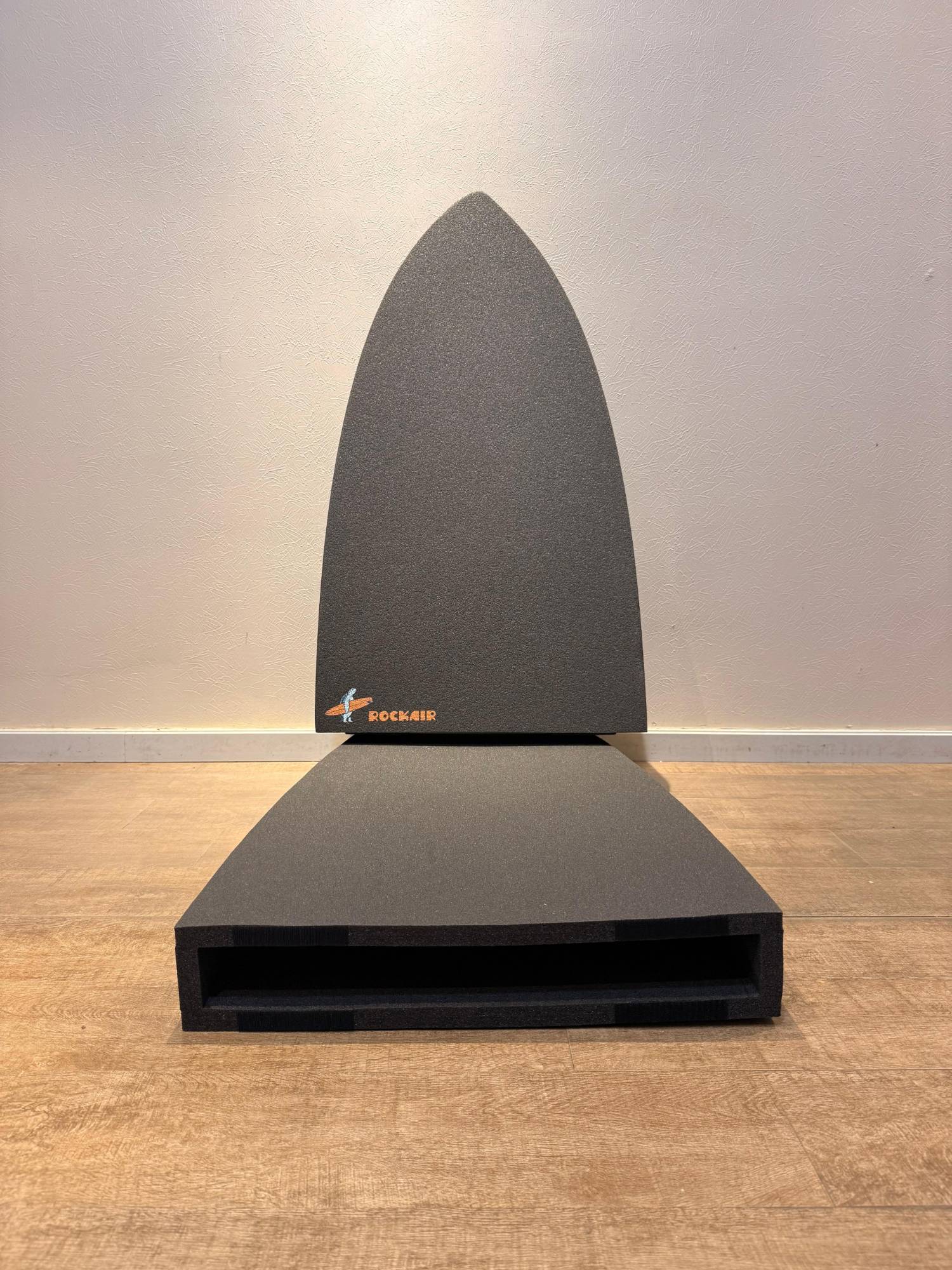
This is what we make, so read this section with that in mind. A Rockair shell is closed cell foam, about 3/4 inch (20 mm) thick on every side. It comes in two parts, one for the nose and one for the tail, and it goes on in about 10 seconds, plus a few seconds for each extension, with no cutting or tape. You use it again on the next trip. Unlike the kits above, it covers the whole board, not only the nose, tail and rails. It reduces the risk of damage. No product makes a surfboard unbreakable.
The catches:
- It's at the higher end of the options here: $149.87 for the Short, $159.87 for the Hybrid and $189 for the Long, which is a pre-order price. Extensions for longer boards cost extra, from $8 each.
- You still need a board bag, and the shell has to fit inside it. Check your bag's inside measurements.
- It's sized to your board, so you need the right one. Find my size shows you which one.
How to choose
- On a tight budget, or flying once: pipe insulation and towels cost the least, if you have the time to do them properly.
- Flying a few times a year: something reusable saves you the cutting and taping each trip.
- Packing several boards: protect each board and put padding between them. Pro-Lite's liners are only for coffin bags, and a Rockair shell works in a bag with 2 or 3 boards. Check your airline's limit too, in surfboard fees by airline.
- Shipping a board instead of flying: paper sleeves are built for that.
- Want the whole board covered without tape: that's the case for a full foam shell.
Whatever you choose, take out the fins and fill the empty space in the bag. A board that slides around can do damage whatever it's wrapped in. For the rest of the trip, see how to fly with a surfboard.
FAQ
What is the best way to protect a surfboard when traveling?
We haven't seen an independent test that ranks the options. Cover the nose, tail and rails, keep the board from moving in the bag, and pick the option that fits your budget and how often you fly.
Is pipe insulation enough to protect a surfboard on a flight?
Plenty of surfers use it, usually with a towel. It only protects where you put it and it can slip, so tape it well and add extra layers on the nose and tail.
Is Flexi-Hex good for flying with a surfboard?
It's mainly made for shipping. For flights, the maker says the paper can degrade if it gets wet or is handled roughly, and suggests bringing spare sleeves. Check their page for the current advice.
Do I still need a board bag if I use foam protection?
Yes, for the foam kits and shells in this guide. They go on the board, and the board goes in the bag.
More guides
- How to pack a surfboard for a flight
- Surfboard fees by airline
- How to fly with a surfboard without damage
- All surfboard travel guides
Sources: Flexi-Hex boardsports, Cleanline on Flexi-Hex, Pro-Lite Air-Liner, Boardfoam, Stay Covered, RailWrap on Etsy, Flexi-Hex Lite at Cleanline, Pyzel on Flexi-Hex, Boardcave on Flexi-Hex.